

Meet the unforgettable pilgrims at the heart of The Pilgrim’s Table — a Camino de Santiago novel about grief, healing, friendship, and transformation at the edge of the world.
Meet the Pilgrims
On an autumn evening in Muxía, Spain — beyond Santiago de Compostela at the rugged edge of the Atlantic — five pilgrims gather around a shared table after completing vastly different journeys across the Camino de Santiago.
Some arrive searching for healing. Others arrive carrying grief, addiction, regret, exhaustion, or questions they have spent years avoiding.
What begins as dinner slowly becomes something deeper: an evening of confession, laughter, memory, and unexpected grace among strangers who realize they are not quite as alone as they believed.
New to the story? Begin with our overview of the Camino de Santiago novel The Pilgrim’s Table
Claudia Hartwell
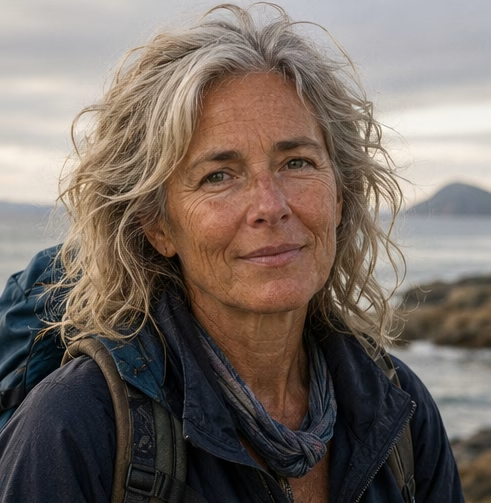
Claudia Hartwell arrived in Muxía with 1,700 kilometers behind her and an entirely different life ahead of her. A 55-year-old Boston woman who had never traveled alone before the Camino, Claudia walked away from a twenty-three-year marriage and across France and Spain carrying little more than a backpack and the quiet hope that freedom might still be possible.
Alex Mercer

Alex Mercer arrived in Muxía by bus — a reality he carries like a private failure. Twenty-seven years old and eight months sober, the American from Portland, Oregon, began the Camino searching for something strong enough to interrupt the inheritance of addiction left by his father. Following an injury, he continued west toward the Atlantic carrying a bandaged ankle and the quiet fear that he might still become the man he had spent his life trying not to resemble.
Dan & Jenny Kowalski
Married thirty-seven years, Dan and Jenny Kowalski arrive in Muxía after their fourth Camino de Santiago, quietly questioning the lives they built back in Winnipeg. Trapped in a practical career, Dan finds meaning in old stone and forgotten history. Jenny, an intuitive nurse, finds herself frustrated by a system that values her administrative time more highly than patient care. Together, they walk across Spain, wondering if starting over might still be possible.

Isabella Hernández
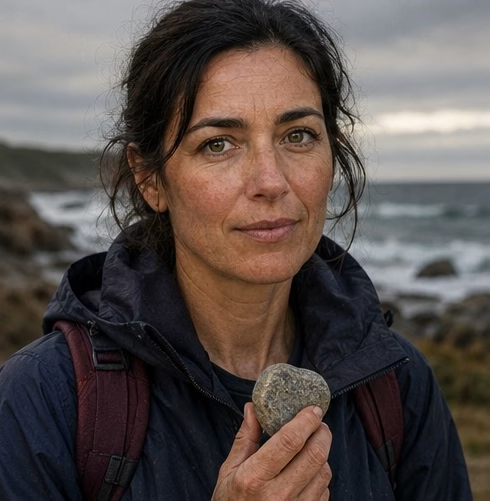
Isabella Hernández arrives in Muxía carrying a stone across Spain and the weight of their final argument with her late brother. A careful, composed history teacher from Barcelona, she follows the Camino route he had planned before his sudden death, slowly discovering that grief is not something we leave behind, but something we learn to carry differently.
Matthieu Dubois
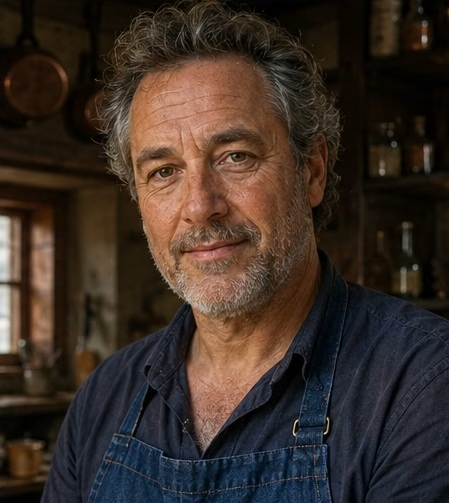
Matthieu Dubois is the quietly observant chef and host of Chez Mer, a small pilgrim house in Muxía where strangers arrive at the “end of the world.” After decades leading elite kitchens across Europe and realizing success had left him empty, Matthieu abandoned his life in Geneva and returned to the lessons of his grandmother’s kitchen in Vézelay. Warm, intuitive, and deeply attentive, he creates spaces where pilgrims feel seen without ever being exposed — slowly rediscovering, through food and hospitality, what it truly means to nourish people.
Mémé Dubois
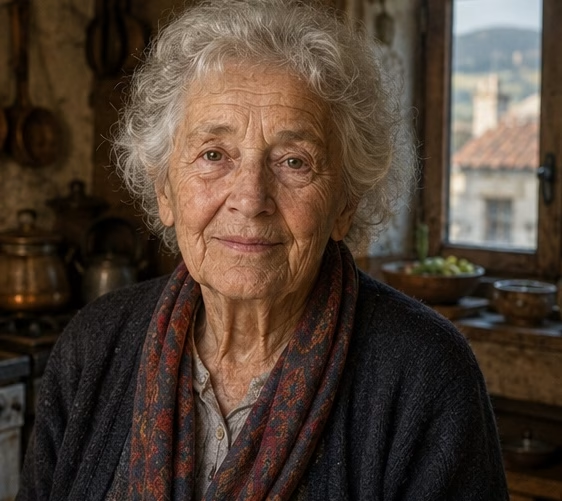
Mémé Dubois is Matthieu’s grandmother, a woman in her nineties whose small kitchen in Burgundy, France, quietly shapes the soul of the novel. A former pilgrim herself, she once walked from France to Santiago and onward to Muxía, carrying her own private longing for a larger life. Through food, patience, and simple acts of care, Mémé taught Matthieu that hospitality is an act of faith and an expression of love — feeding people not only for hunger, but for loneliness, grief, and hope.
Curious about the coastal setting behind the novel? Explore Muxía, Spain, and the end of the Camino.
Continue the Journey
Discover the full story behind these camino pilgrims, their shared meal, and the conversations that change everything.
FREQUENTLY ASKED QUESTIONS
Do you need to have walked the Camino to enjoy The Pilgrim’s Table?
No. While the novel is deeply rooted in pilgrimage culture, its themes of healing, friendship, grief, and reinvention resonate with readers far beyond the Camino community.
Is The Pilgrim’s Table based on real Camino experiences?
The novel draws inspiration from real pilgrimage traditions, landscapes, and emotional experiences encountered along the Camino de Santiago.
Where is Muxía, Spain?
Muxía is a small fishing village on the Atlantic coast of Galicia, Spain, often visited by pilgrims continuing beyond Santiago de Compostela toward the historic “end of the world.”