
There are journeys that change your location.
And then there are journeys that change your life.
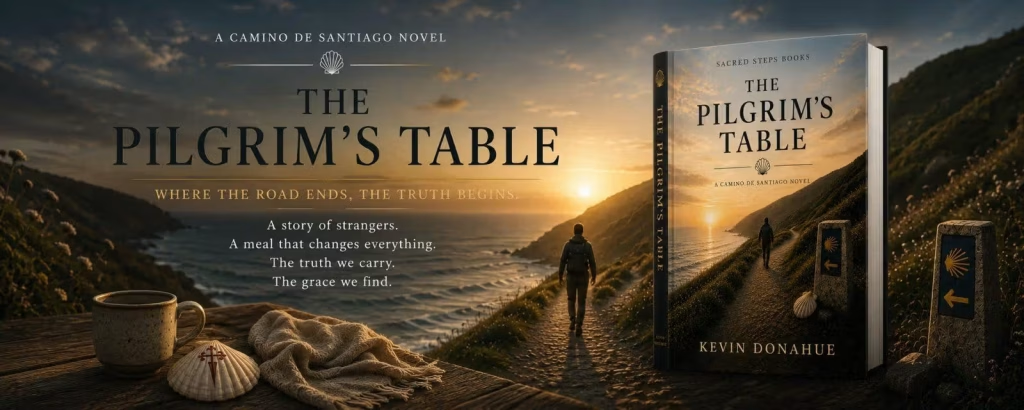
The Pilgrims’ Table is a novel born from the roads, conversations, and quiet transformations that happen along Spain’s legendary Camino de Santiago — one of the world’s most meaningful pilgrimage routes.
But this is not simply a “Camino novel.”
It is a story about grief. Reinvention. Marriage. Addiction. Faith. Loneliness. Hope. Hospitality. And the extraordinary way strangers sometimes see us more clearly than the people who have known us for years.
At its center is a communal dinner at a small inn overlooking the Atlantic Ocean in Muxía — the medieval “end of the world.” Five pilgrims arrive separately after months of walking ancient roads across Europe. Over the course of one evening, stories are shared, burdens are confronted, and lives begin to change. (thepilgrimstable.com)
The novel was inspired by years of pilgrimage experience, including walks along the Camino de Santiago, the Via Francigena through Italy, England’s Pilgrims’ Way, and other historic footpaths explored by author Kevin Donahue. (thepilgrimstable.com)
For many readers, however, the real surprise is this:
You do not need to have walked the Camino to feel deeply connected to this story.
What Is The Pilgrims’ Table About?
After months of walking ancient paths across Spain, five pilgrims arrive at Chez Mer, a quiet refuge near the Atlantic coast.
- Claudia, a Boston woman escaping a suffocating marriage
- Alex, a young man navigating sobriety after injury ended his pilgrimage early
- Dan and Jenny, Canadians reconsidering retirement, identity, and decades of partnership
- Isabella, a Spanish teacher carrying grief and memory
- Matthieu, the French innkeeper who has listened to pilgrims for years but never walked the Camino himself
What begins as a shared meal slowly becomes something more profound.
As wine is poured and stories unfold, the strangers around the table begin confronting the truths they have avoided for years. (thepilgrimstable.com)
The result is an emotionally layered novel that blends literary fiction, travel writing, spiritual reflection, and deeply human storytelling.
Five Reasons The Pilgrims’ Table May Be the Perfect Book for You
1. If You Feel Stuck at a Crossroads in Life
Many readers are drawn to stories about reinvention because they recognize themselves in them.
Maybe you are navigating:
- A major life transition
- A career change
- Divorce
- Empty nesting
- Grief
- Questions about purpose
- A longing for “something more”
The Camino de Santiago has long attracted people standing at emotional crossroads. This novel captures that universal experience with honesty and warmth.
At its heart, The Pilgrims’ Table asks:
What happens when we finally stop running long enough to tell the truth about our lives?
2. If You Love Character-Driven Literary Fiction
This is not an action-heavy thriller.
It is a deeply human novel built around conversation, atmosphere, emotional revelation, and relationships.
Readers who enjoy reflective, character-centered storytelling — the kind of books where people rather than plot become unforgettable — will likely feel at home here.
The novel explores:
- Vulnerability
- Human connection
- Marriage and long-term partnership
- Midlife reinvention
- Addiction recovery
- Faith and doubt
- Found family
- The healing power of hospitality
The dinner table itself becomes the emotional center of the story — a place where strangers slowly become a kind of pilgrim family.
3. If You Are Fascinated by the Camino de Santiago
Interest in the Camino de Santiago has grown dramatically in recent years, attracting pilgrims, hikers, spiritual seekers, and travelers from around the world.
The novel immerses readers in:
- Pilgrim culture
- Albergues and communal meals
- The emotional rhythm of long-distance walking
- Santiago de Compostela
- The Atlantic coast of Galicia
- The quiet emotional intimacy formed on pilgrimage
Unlike many travel-oriented Camino books, however, The Pilgrims’ Table focuses less on the mechanics of the walk and more on the transformation that happens afterward.
It asks an important question many pilgrims eventually face:
What do you do when the walking ends? (Apple Podcasts)
4. If You Crave Stories About Genuine Human Connection
Modern life often leaves people surrounded but disconnected.
One of the reasons pilgrimage resonates so deeply is that it strips away many of the roles, distractions, and identities people normally hide behind. On the Camino, conversations become unusually honest.
That emotional honesty is central to this novel.
The pilgrims at the table are not heroes or celebrities. They are ordinary people carrying invisible burdens — much like the people sitting beside us every day.
Readers who loved the emotional intimacy of novels centered around friendship, healing, and meaningful conversation may find this story especially powerful.
5. If You Enjoy Book Club Fiction That Sparks Discussion
The Pilgrims’ Table Book Club Resources has been intentionally designed to encourage conversation.
The novel naturally opens discussions about:
- What defines a meaningful life
- Whether people can truly change
- Pilgrimage and spiritual searching
- Marriage and identity
- Addiction and recovery
- Hospitality and belonging
- Regret, forgiveness, and second chances
The official book club resources include discussion guides, recipes inspired by the novel, playlists, Camino-themed experiences, and additional materials that extend the story beyond the page.
For reading groups seeking thoughtful, emotionally resonant fiction, the novel offers substantial thematic depth while remaining accessible and warmly written.
Why the Story Resonates Beyond Pilgrimage
Although the Camino provides the setting, the deeper themes are universal.
Very few people will walk 1,000 miles across Spain.
But nearly everyone understands:
- Carrying grief
- Wondering if life should feel more meaningful
- Longing for community
- Trying to heal
- Starting over
- Feeling unseen
- Hoping it is not too late to change direction
That is ultimately why pilgrimage stories endure.
The road becomes a metaphor for the lives we are all trying to navigate.
About the Author
Kevin Donahue is the host of the Sacred Steps Podcast, streaming in more than 100 countries, and the author of Sacred Steps: A Pilgrimage Journal. His experiences walking the Camino de Santiago, Via Francigena, England’s Pilgrims’ Way, and other sacred routes inspired the emotional landscape of The Pilgrims’ Table. (thepilgrimstable.com)
Begin the Journey
Whether you are a lifelong pilgrim, an avid reader of literary fiction, a member of a book club, or simply someone searching for a story about hope and human connection, The Pilgrims’ Table invites you to sit down at the table.
Because sometimes the people we meet at the end of the road help us understand the journey we were really taking all along.
Explore the novel, previews, signed copies, and book club resources at:
